
Why ADUs Became a Real Option
A decade ago, building a second unit on a single-family lot in California meant navigating a maze of discretionary approvals, parking requirements, and often outright prohibition depending on the jurisdiction. A series of state laws passed over the last several years changed that fundamentally, requiring cities to approve qualifying ADUs through a ministerial process rather than a lengthy discretionary review, and stripping away many of the parking and setback requirements that used to kill projects before they started. The result is that accessory dwelling units have gone from a niche workaround to one of the most practical ways for San Diego homeowners to add living space, generate rental income, or house a family member, without buying a different property.
What the Law Actually Allows
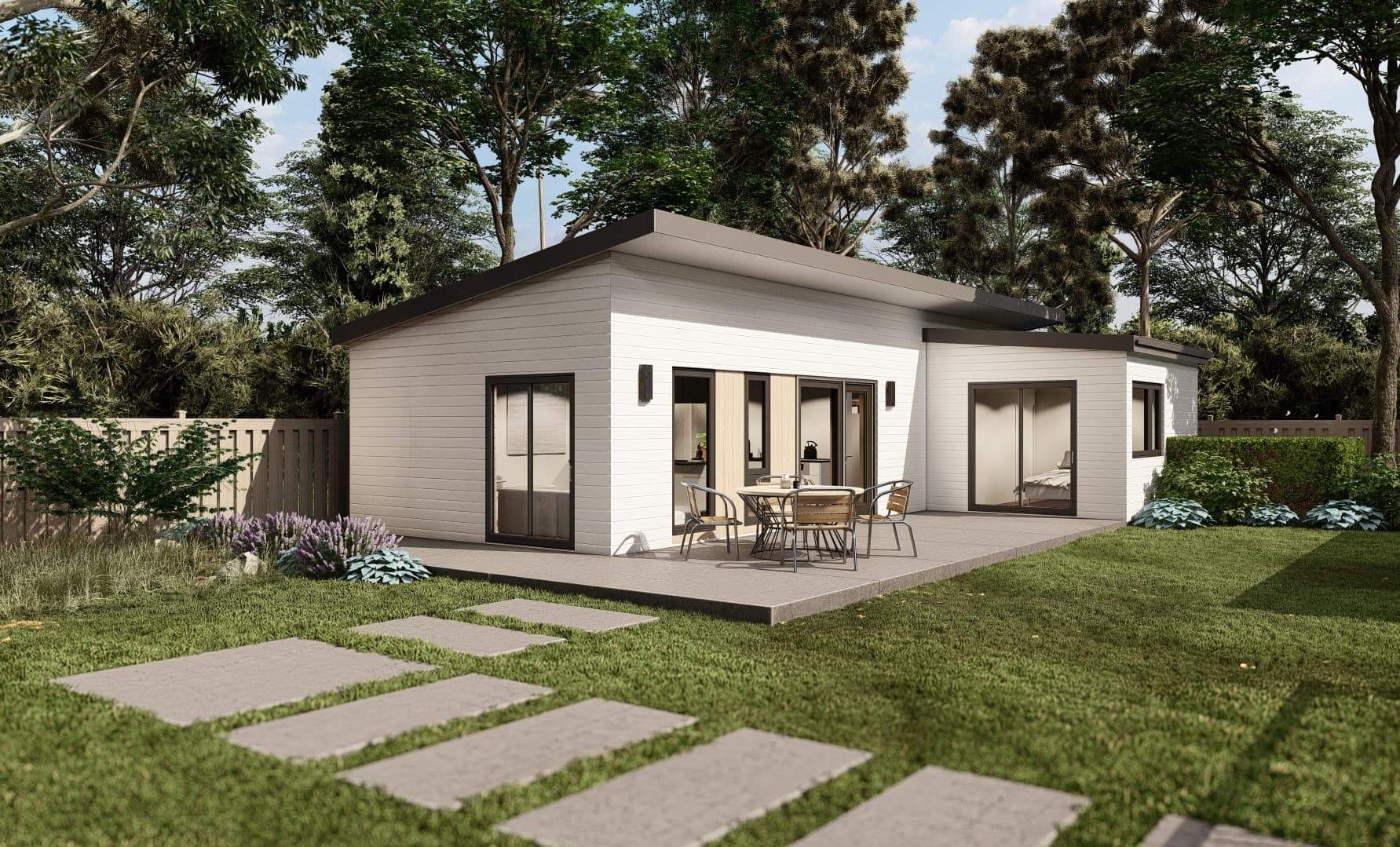
California's current ADU framework allows most single-family lots to add at least one ADU and, in many cases, a junior ADU as well. A JADU is capped at 500 square feet and must be contained within the existing structure of the primary home, essentially a converted room or garage with its own entrance and a basic kitchen setup, rather than a freestanding structure. A full ADU can be a detached structure, an attached addition, or a conversion of existing space like a garage, and size limits are generally generous enough, typically up to 1,200 square feet depending on the jurisdiction and lot, to build something that functions as a genuine, independent small home.
One provision worth knowing specifically: local agencies are prohibited from charging impact fees on ADUs smaller than 750 square feet, and fees on larger units must be charged proportionately rather than at the flat rate applied to a full new single-family home. That single rule has meaningfully changed the economics for smaller ADU projects, since impact fees on a conventional new home can run into the tens of thousands of dollars.
The Real Cost Breakdown
This is where most homeowners' expectations and reality diverge. As of 2025, building an ADU in California typically runs somewhere between $150,000 and $350,000 all-in, depending heavily on size, design complexity, site conditions, and location. On a cost-per-square-foot basis, expect a range of roughly $200 to $450, with urban, higher-cost-of-labor markets pushing toward the top of that range and simpler, more standardized designs landing closer to the bottom.
To put that in concrete terms: a modest 500-square-foot detached ADU with a straightforward design might land in the $150,000 to $225,000 range in a moderate-cost market, while a larger, more architecturally ambitious 1,000-plus-square-foot unit with a full kitchen, in-unit laundry, and higher-end finishes can push well past $300,000. Site conditions matter enormously here: a flat, easily accessible backyard with existing utility connections nearby is a dramatically cheaper build than a sloped lot requiring significant grading, retaining walls, or a long utility run from the street.
Why Cost Per Square Foot Varies So Much
A few factors explain the wide range homeowners encounter when they start collecting quotes. Foundation type matters, a slab-on-grade foundation is cheaper than one requiring piers or a raised foundation for drainage or slope reasons. Utility connections matter just as much; if the ADU can tie into existing sewer, water, and electrical service without a long trench run or a panel upgrade, that alone can save tens of thousands of dollars. Permitting speed and requirements vary by jurisdiction even within San Diego County, and delays translate directly into carrying costs on construction loans. And finish level, obviously, spans an enormous range: a builder-grade kitchen and bathroom cost a fraction of a fully custom one.
Prefab and modular ADU options have also become more common and can offer more cost predictability than a fully custom stick-built design, though delivery and site preparation costs still need to be budgeted separately from the unit price a prefab company quotes.
Financing an ADU
Most homeowners fund an ADU through some combination of a cash-out refinance, a home equity line of credit, a construction loan, or, increasingly, ADU-specific loan products that some lenders and even some state and local programs now offer. A meaningful factor in financing decisions is how the lender treats future rental income from the ADU; some loan programs allow projected rental income to count toward qualifying for the loan itself, which can materially change what a homeowner is able to borrow against their existing equity.
It's worth shopping specifically for a lender experienced with ADU financing, since the appraisal and underwriting process for a project that doesn't exist yet works differently than a standard purchase or refinance, and not every lender or appraiser handles it equally well.
The Rental Income Math
For homeowners building an ADU primarily as an investment, the return depends heavily on local rental rates relative to the total build cost. A well-located ADU in a strong rental submarket can generate enough monthly income to cover the financing cost of the project within a reasonable number of years, sometimes well under a decade depending on the market and how the project was financed. It's worth running a realistic, conservative version of this math before committing, factoring in vacancy, maintenance, property management if you're not planning to self-manage, and the very real possibility that build costs run over the initial estimate, which happens on a meaningful share of construction projects regardless of size.
Permitting Timeline Reality
Even with the state's ministerial approval requirements, expect the full process, design, permitting, and construction, to take meaningfully longer than most homeowners initially assume. Design and permit-ready drawings alone can take a couple of months. Plan check and permit issuance, even under streamlined rules, often takes several weeks to a few months depending on the jurisdiction's current workload. Construction itself typically runs anywhere from four to eight months depending on size and complexity. All told, a homeowner should generally budget closer to a year from initial planning to a finished, occupiable unit, even though the legal barriers to entry have genuinely gotten much lower than they used to be.
ADU vs. Home Addition vs. Buying Bigger
It's worth comparing an ADU honestly against the alternatives homeowners usually consider. A conventional home addition, extra bedrooms or living space attached to the existing house, often costs less per square foot than a standalone ADU, since it can share existing utility connections, foundation, and roofline in ways a detached structure can't. But an addition doesn't generate independent rental income or offer the same flexibility to eventually separate the space for a family member or tenant. Buying a larger home entirely means trading San Diego's transaction costs, closing costs, a higher purchase price at current rates, and the disruption of a move, for more space, without adding any net new housing to the local supply.
An ADU sits in an interesting middle position: generally more expensive per square foot than an addition, but functionally independent in a way an addition isn't, and dramatically less disruptive and costly than a move. For homeowners who already like their lot, their neighborhood, and their existing home, and simply need more space or a source of income, it's often the option that best matches the actual goal rather than just the cheapest square footage.
Is It Worth It?
For the right lot and the right goals, an ADU is often one of the more efficient ways to add both living space and long-term property value in San Diego, particularly compared to the cost and disruption of a full home addition or a move to a larger property. It's not automatically the cheapest path to more space on a pure cost basis, but it's uniquely flexible: an ADU can house a family member today and become a rental unit tomorrow, or vice versa, without the transaction costs of buying and selling real estate to get there.
A Practical Checklist Before You Start
- Get a real site assessment, not just a design consultation, to understand foundation, utility, and access costs specific to your lot before you fall in love with a floor plan.
- Confirm your jurisdiction's specific ADU rules, since size limits, setback requirements, and fee structures still vary somewhat by city even under the state framework.
- Shop lenders specifically for ADU experience, particularly if you're counting on projected rental income to help you qualify for financing.
- Budget a contingency of at least 10 to 15% above your initial cost estimate, since site surprises and material cost changes are common on projects of this size.
- Talk to a real estate professional about the value impact, since an ADU's effect on your property's resale value varies by neighborhood and buyer pool, and it's worth understanding before you build rather than after.