
The Simple Comparison
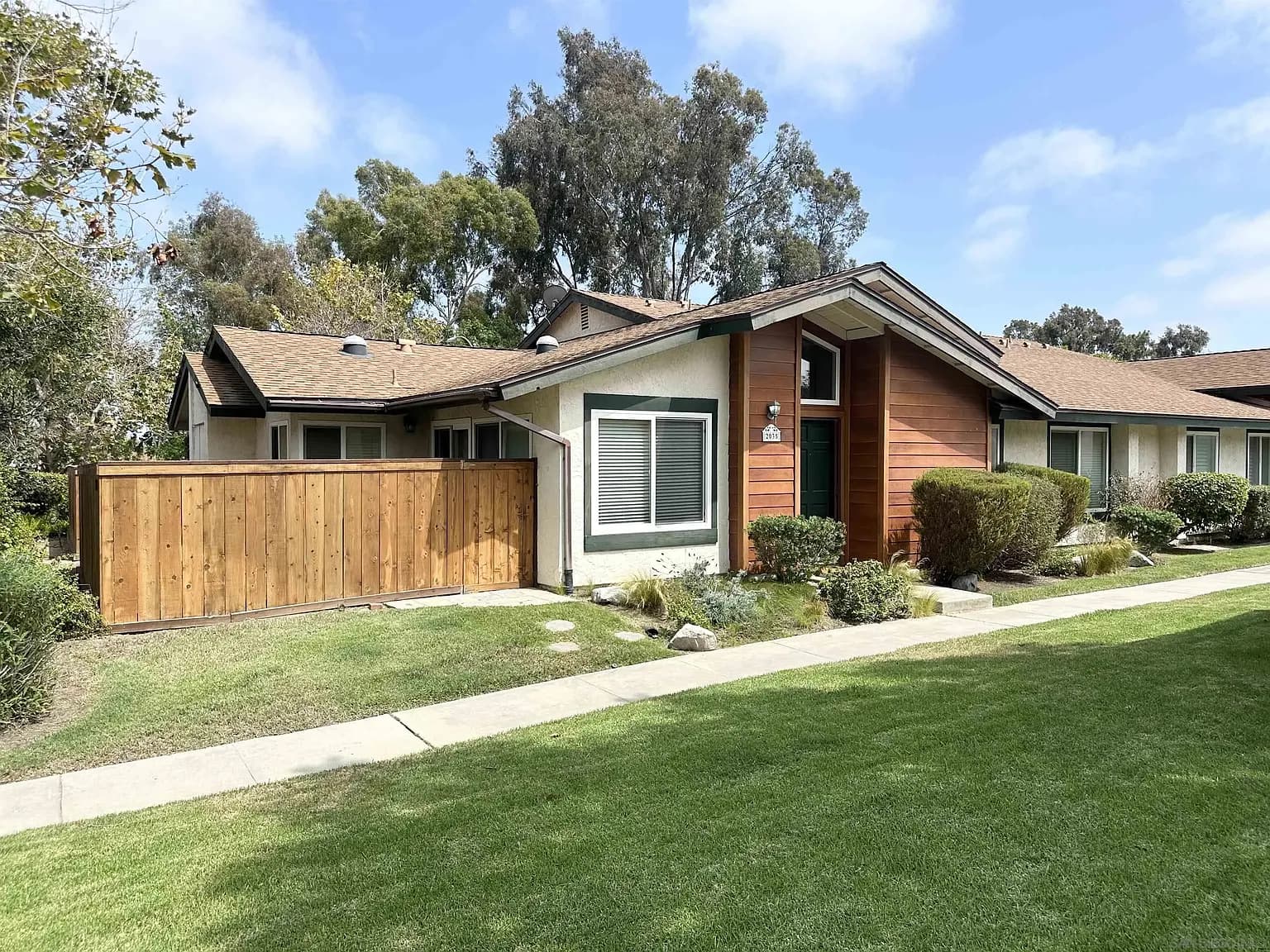
A million dollars goes a very different distance depending on where you're shopping. In San Diego, that budget lands you a solid but unremarkable single-family home, often outside the coastal core, in a good but not flashy neighborhood, on a normal-sized lot. In cities like Indianapolis or Cleveland, the same money buys a large, recently updated home on real acreage, the kind of property that would run well into eight figures if it existed in La Jolla or Del Mar.
It's the kind of comparison that goes viral precisely because it's true and because it raises an obvious question: why would anyone pay San Diego prices when the same money buys so much more house somewhere else? The honest answer is more interesting than "California is overpriced."
Why the Gap Exists
Home prices are, at their core, a function of how much land and construction cost, filtered through how many people want to live somewhere relative to how much housing exists there. San Diego combines expensive land, driven by geography that limits how far the city can sprawl, ocean on one side and mountains and a national forest on much of the rest, with a construction and permitting environment that makes adding new supply slow and expensive. Indianapolis and Cleveland have essentially the opposite combination: abundant buildable land and a much lighter regulatory lift, which keeps the cost of building, and therefore the price of buying, dramatically lower.
Neither situation is really about the physical house. A well-built 2,400-square-foot home doesn't cost fundamentally different amounts to frame and finish in different parts of the country. What differs enormously is the price of the land underneath it and the cost of getting permission to build on that land in the first place.
The Sun Belt Correction Changes the Picture
For most of the pandemic years, the comparison that got the most attention wasn't San Diego versus the Midwest, it was San Diego versus fast-growing Sun Belt metros like Austin and Phoenix, which combined lower prices with strong job growth and warm weather. That comparison has gotten more complicated recently. Austin posted one of the largest home price declines of any major U.S. metro heading into 2026, with new-home inventory running roughly 91% above 2019 levels and months of supply climbing well past five, solidly buyer's-market territory. Phoenix has seen a milder version of the same pattern.
San Diego, by contrast, saw prices soften only modestly over the same period, and nearby Orange County actually saw its inventory shrink further while prices kept climbing. The difference comes down to the same supply dynamic driving the original $1M comparison: Texas and Arizona metros can and do respond to demand by building enormous amounts of new supply on cheap, abundant land. Coastal California mostly can't, so a slowdown in buyer demand shows up as a modest price dip rather than a supply glut, and a renewed wave of demand tends to show up as a fast return to price appreciation rather than getting absorbed by new construction.
What You're Actually Paying For
The comparison isn't really about home size at all, it's about everything the home sits inside of. Job markets are the biggest piece: San Diego's economy is anchored by biotech, defense, tourism, and a research and university base that supports high-wage employment, the kind of jobs that let households actually afford the area's prices over time even if it takes longer to save the down payment. Climate is a real factor too, not just as a lifestyle preference but as an economic one; mild year-round weather reduces heating and cooling costs and supports an outdoor-oriented, tourism-driven economy that a place like Cleveland, with real winters, simply can't replicate.
Then there's the harder-to-quantify piece: proximity to coastline, mountains, and a particular kind of natural beauty that a meaningful number of people are willing to pay a significant premium to live near. That premium isn't rational in a spreadsheet sense, but it's also not going away, because the supply of coastline is fixed in a way the supply of Midwestern acreage is not.
The Costs the Purchase Price Doesn't Show
The sticker price comparison also leaves out ongoing costs that can meaningfully change the picture. Property tax rates vary widely by state, and while California's Proposition 13 framework actually keeps the effective tax rate relatively moderate and predictable once you own a home, other states with lower purchase prices sometimes carry higher property tax rates that erode the savings over time. Homeowners insurance is another variable that's shifted a lot recently: insurance costs have risen sharply in parts of the Sun Belt exposed to hurricanes, wildfire, and severe convective storms, in some cases enough to meaningfully change the true monthly cost of owning a "cheap" home in a higher-risk region. San Diego has its own wildfire exposure in certain areas, but it isn't uniformly priced into every neighborhood the way storm risk is across large swaths of the Gulf Coast and parts of the Sun Belt.
Utility costs matter too. Mild coastal weather means lower heating and cooling bills than a home in Cleveland will need for several months of the year, a real, if modest, offset to San Diego's higher purchase price that rarely makes it into the viral comparison.
The Long Game: Appreciation
Over long time horizons, coastal California real estate has appreciated faster than most of the country, precisely because of the supply constraints described above. That doesn't mean every year looks like appreciation, 2025's price softening in San Diego is proof of that, but it does mean the base case for a market where new supply structurally lags demand is upward pressure on prices over a full real estate cycle. A buyer in Cleveland is betting on a market where supply can expand to meet demand relatively easily, which tends to produce more stable but also more modest long-term appreciation.
Neither approach is wrong. They're different bets on what you value: more house and lower carrying costs today, or a smaller house with a better long-term track record of building equity, assuming the region's job market and desirability hold up.
Should You Actually Chase the Cheaper Market?
For someone who can genuinely work from anywhere and has no strong ties to San Diego, the math on relocating to a lower-cost metro can be compelling, especially in the current environment where several Sun Belt markets are offering real buyer leverage after their 2025 corrections. But it's worth being honest about what's actually being traded away: the job market depth, the climate, the coastline, and, in California's case, the long-term supply constraint that has historically supported appreciation. For someone whose career, family, or simply preference is rooted in San Diego, the $1M comparison is interesting but not actually decision-relevant. You're not choosing between a San Diego house and a Cleveland house. You're choosing between a San Diego house and continuing to rent in San Diego, which is a very different comparison.
A Simple Framework, If You're Actually Deciding
For buyers genuinely weighing a move to a lower-cost market, a few questions tend to matter more than the raw price comparison:
- Is your income tied to a specific place, or portable? A remote-eligible income changes this calculation far more than a lower cost of living alone.
- How exposed is the cheaper market to its own correction? Several Sun Belt metros that looked like screaming deals in 2023 and 2024 are now sitting on years of oversupply; buying at the bottom of a correction is different from buying into one that's still unfolding.
- What are you actually optimizing for? More space and a lower monthly payment, or long-term appreciation potential and proximity to a coastline, climate, and job market you can't replicate elsewhere. Neither answer is wrong, but conflating the two leads to buyer's remorse either way.
The Takeaway
The viral version of this comparison treats the price gap as a scandal. The more useful version treats it as data: a snapshot of where land is scarce and where it isn't, where job markets pay a premium and where they don't, and where a recent correction has handed buyers real leverage versus where it hasn't. What a million dollars buys you isn't really a statement about house size. It's a statement about everything that comes with the address.